TMD & AIRWAY Ad
Get Answers To Complex TMD & Airway Cases
Learn a systematic, hands-on approach to evaluating the joints, muscles, occlusion, and airway—so you can better understand what’s driving the problem before deciding how to treat it.
The Connection From Diagnosis Through Treatment:
- Differentiate joint, muscle, occlusal, and airway-related problems
- Evaluate TMJ conditions with a more systematic diagnostic process
- Understand when and how splint therapy fits into treatment
- Assess airway concerns and recognize when dental treatment may be appropriate
- Make better decisions about treatment, referral, and interdisciplinary care
Learn The TMD & Airway Connection
CLAIM OFFER: $400 OFF + $500 CREDIT
See how this course can help you approach complex TMD and airway cases with greater diagnostic clarity. Get dates, course details, financing options, and answers from a Dawson Course Advisor.
COMING SOON
TMD & Airway: The Critical Connection
at The Dawson Academy in Tampa, FL • SAVE $400, USE CODE: ELECTIVE26
What You'll Be Learning
TMD and airway cases can be difficult because the symptoms don’t always point clearly to the source. This course gives you a systematic way to evaluate the joints, muscles, occlusion, and airway together—then use those findings to guide diagnosis, treatment planning, and referral decisions. Across three days, you’ll work hands-on with joint classification, splint therapy, airway evaluation, patient exams, and real case studies so you can return to practice with a more confident clinical process.
Day 1
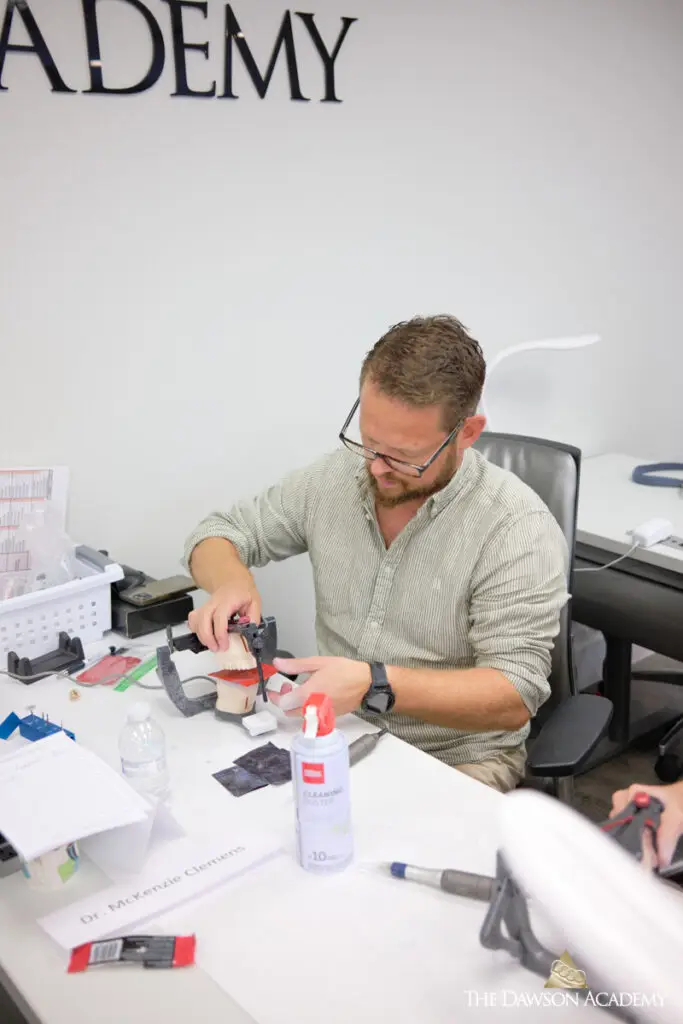
- Get an overview of TMD and set personal goals for the course
- Study TMJ anatomy in detail, including how the joint, muscles, and occlusion work together
- Learn the Piper Classification system for staging joint breakdown, and the cause-and-effect relationships behind it
- Fabricate and place a B splint on a lab partner, hands-on
- Learn a structured strategy for the new patient exam experience, including tools like Dopplers, ROM sheets, Lucia Jig/Stick compound, Quicksplints, and Aqualizers
- Wear the B splint overnight and read an assigned article for review on day 2
Day 2
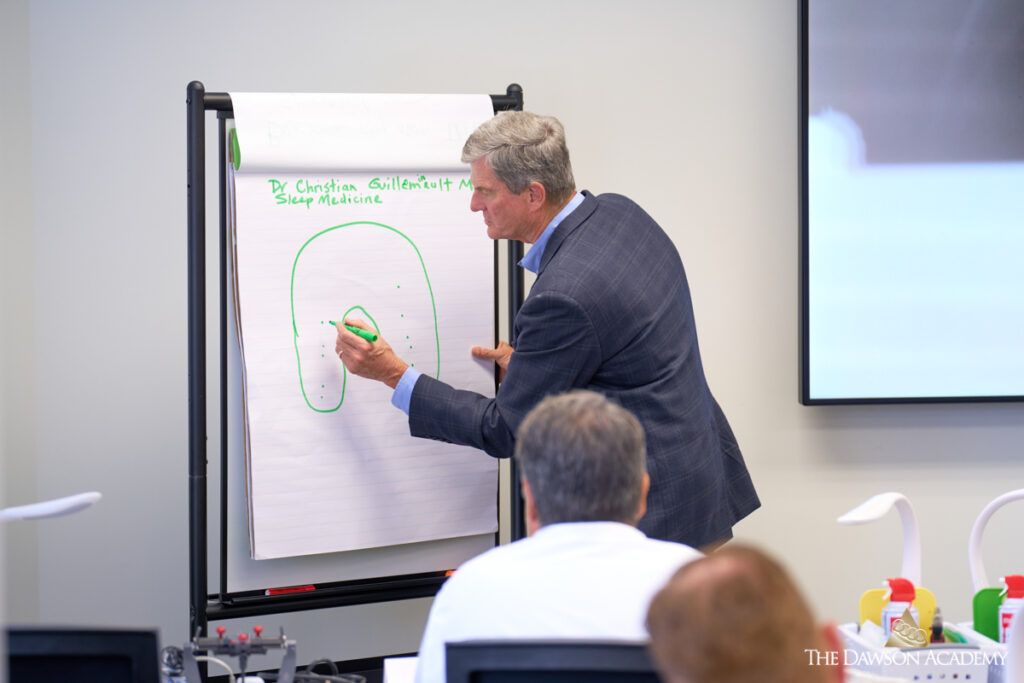
- Review Day One, then run a full new patient exam on a lab partner
- Learn to diagnose TMD symptoms across joints, muscles, nerves, and bruxism
- Extend that diagnostic process to airway-related factors: tongue thrust, mouth breathing, and malocclusion, using ROM, muscle palpation, Doppler, Piper Classification, and imaging as part of a complete exam
- Practice equilibrating a lower CR splint, hands-on
- Apply the full diagnostic framework to real case studies
Day 3
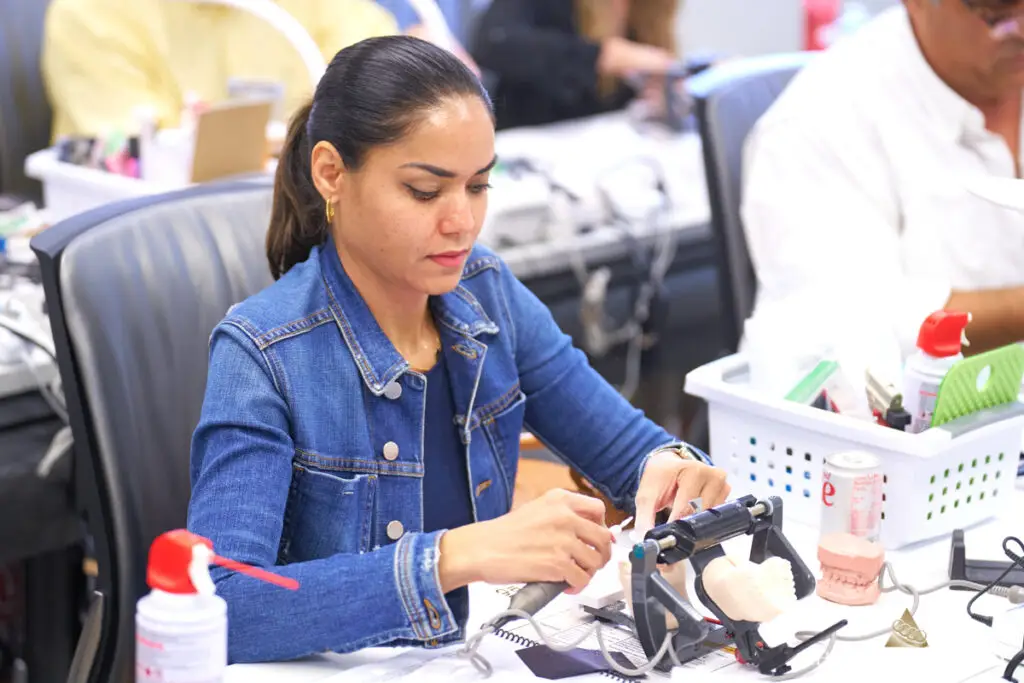
- Learn how diagnosis drives treatment planning and decision-making
- Work through additional case studies to reinforce treatment planning
- Definitive occlusal therapy demonstration via an equilibration video
Get A Sample Of This Course
Hear it directly from your instructor, Dr. DeWitt Wilkerson
What students said About This Course
FAQs on This TMD & Airway CE course
Your answers to Keys for TMD & Airway: The Critical Connection
This course goes beyond simply reviewing symptoms or treatment options. The focus is on how to think through the diagnosis first—evaluating the joints, muscles, occlusion, and airway together so you can better understand what is actually driving the patient’s problem before deciding what to do next.
You’ll also gain perspective from both the dental and medical sides of the masticatory system, including how physicians evaluate these patients and when collaboration with other specialists may be appropriate. Accurate differential diagnosis is emphasized as the foundation for choosing the right treatment approach
The goal is clinical implementation, not just theory.
The course includes hands-on demonstrations and practical instruction around joint and airway evaluation, testing, splint therapy, and the diagnostic process so you can return to your practice with a more systematic way to evaluate these patients.
That practical component matters because TMD treatment often depends on correctly distinguishing muscle-related, joint-related, and other contributing factors before selecting therapy.
This course teaches phased and full-arch composite options, from bonding a few spaces to a full-mouth esthetic and functional rehab, so you have a real path forward at a lower cost, with no lab fee and same-day delivery. Dentists who take this course learn how to turn declined porcelain cases into accepted composite cases.
Yes. One of the major goals is to help you make better treatment decisions based on the diagnosis rather than simply trying a procedure and seeing what happens.
You’ll explore how findings can influence decisions around splint therapy, occlusal treatment, airway-related dental procedures, surgery, and interdisciplinary care. The course also addresses working with physicians and other specialists when the patient’s condition extends beyond what should be managed dentally. The supporting material similarly frames treatment as diagnosis-dependent rather than one-size-fits-all.
Airway is an important part of the course, but it is taught within the broader diagnostic picture rather than as a standalone appliance course.
You’ll learn to think more like a sleep physician when evaluating airway concerns—how to assess and classify what you’re seeing, understand when dental treatment may play a role, and recognize when collaboration with a medical provider is the more appropriate next step.
The goal is not to treat every airway finding dentally. It’s to make more informed decisions about what the patient actually needs.
A dentist who took the very first course described it as the most practical course he’d been to in years, and said he felt equipped to go back to his office and start doing cosmetic dentistry he wasn’t comfortable with before. That’s the standard this course is built to meet.
This course is especially valuable for dentists who encounter patients with jaw pain, joint dysfunction, muscle symptoms, occlusal instability, airway concerns, or cases where the diagnosis simply isn’t obvious.
It is also a strong fit for clinicians who already treat some TMD patients but want a more systematic framework for deciding what they are looking at, what should be treated dentally, and when another specialist should become involved.
You do not need to want to become “the TMD dentist” in your community. The value is being better equipped to recognize and manage the complex patients who are already walking into your practice.
Financing is available; please contact us directly to explore interest-free financing details.
Looking for more info?
Connect with a Dawson Course Advisor and find the answers to your questions. From travel accommodations, to course objectives – give us a shout.